Will the ‘DC Super Hero Girls’ Line be the Princess Alternative I’m Looking For?

dc super hero girls, kids licensed products, super heroes for girls, women and comics, gender and comics, wonder woman,
DC Super Hero Girls, A New Super Hero Universe Designed Just For Girls

Superheroes are for boys. That’s a fact. What’s also true, but less accepted, is that superheroes are for girls too. So it’s great that DC and Warner are acknowledging this with their new project ‘DC Super Hero Girls’.

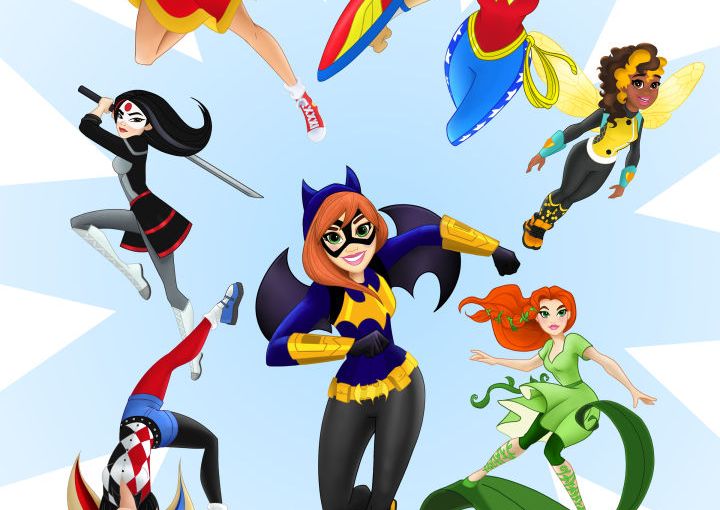
As the geek dad of a little girl, trying desperately to introduce her to alternatives to Disney Princesses and the like, I know how difficult it is to find appropriate content and merchandise featuring female superheroes, so when I first read about this I was excited. It features teenage versions (hence justifying the ‘girls’ tag) of Wonder Woman, Supergirl, and Batgirl (who were in my Top Five Awesome Alternatives to Disney Princesses). The likes of Harley Quinn, Bumble Bee, Poison Ivy, and Katana will also be involved. The target audience is girls age 6-12.

Finally, we have a big media corporation acknowledging what we keep banging on about – that there is an untapped market of girls who love superheroes. Glancing at the artwork, I thought how refreshing to see a group of female characters for girls in dynamic action poses, rather than the passive imagery that usually adorns apparel and accessories in the ‘pink’ aisle.

But taking a closer look at the artwork, I started to have some doubts. I realised that they all look like generic Disney Princess clones, which potentially alludes to the marketing intentions of those involved – going after Disney’s share of the girls merchandise market. If they do this by offering superhero culture as a real alternative to princess culture, that would be great. But if they take these superheroes too far in the direction of Disney’s heroines, it will be little more than a cynical market grab than trying to create a different offering. There are also issues of body image – while superheroes have always been visually hyper-realistic there’s a big difference between males having big abs and girls having waists smaller than their heads.

Then there’s the idea that this is being “designed just for girls”. It’s important to Include boys in anything involving female superheroes, so they understand from an early age that this genre is for girls too. I still read of boys telling girls that they can’t be into superheroes/Star Wars, only boys can. Subdividing the genre to create a girls only space clearly doesn’t promote inclusion.

The involvement of Barbie manufacturer Mattel is another worrying sign. While it’s worth noting they’ve said they’re making “action figures”, not dolls, this is the company that has presented a narrow view of femininity with Barbie for decades. If you want to see the kind of female superhero THEY think little girls want to play with, look no further than their recent Barbie superhero Super Sparkle, a pink and glittery princess who gets super powers from being kissed by a magical butterfly.

You can bet Mattel have noticed that Wonder Woman, as well as being a superhero, is also a princess.

There’s also the mention of LEGO, and “their experience and success engaging girls”. This can only be alluding to their LEGO Friends brand, the popular but divisive line of LEGO for girls, a pink and pastel gender ghetto that exists away from the rest of LEGO’s creative construction toys. A dedicated girls LEGO implicitly defines the rest of to as for boys. I worry the same thing could happen here. And that they’ll make a superhero spa playset.

And finally, they’re not even superheroes! They’re called ‘Super Hero Girls’ not ‘Superhero Girls’. The cynic in me suspects the thinking is that superheroes are for boys, but these ‘super heroes’ are for girls.

Am I being overly pessimistic? Probably. I would love this to be awesome. In a time when female superhero characters such as Black Widow, Gamora, and Big Hero 6’s Go-Go and Honey Lemon are routinely removed from merchandise, a new female superhero range is great. There’s no way they can ignore the female characters when they’re ALL female! So we should get a viable alternative to the pink & pastel shimmer & sparkle female characters of the moment. I hope that the cartoons, books, and comics provides wonderful character led tales of action, adventure, and inspiration with a diverse range of female superheroes (and villains). The lead writer of the project is a woman, Shea Fontana, so we’re not simply getting a male idea of what they think little girls like.

But ultimately, the reason I want my daughter to be exposed to female superheroes is to offer her an alternative to the current mass market merchandise targeted to girls. If DC Super Hero Girls is simply a cynical way to combine aspects of Disney Princesses and Barbie in order to get a piece of the existing ‘girl’ market, then it’s no real alternative at all.

=====

I’d love to know what you think about this ‘DC Super Hero Girls’ line.

Please comment below, join the conversation on the Facebook page, or on Twitter @manvspink.

Top Five Awesome Alternatives to Disney Princesses

If you’re raising a girl, there’s no escaping the reign of princesses over their generation – especially Disney Princesses. Frozen’s Anna and Elsa have only strengthened the power that the princess industrial complex wields over their developing cultural lives. If you’re tired of all the trappings of princess culture cluttering up your little girl’s childhood, or just wish to expose them to alternative female led films, TV, books, and toys – here are my top five awesome alternatives to Disney Princesses to inspire and empower your little girls.

1. Studio Ghibli

Disney Princess alternative, My Neighbour Totoro, My Neighbor Totoro, Studio Ghibli, Hayao Miyazaki, Disney Princess alternatives, Disney Princesses alternatives, alternatives to Disney Princess,
‘My Neighbour Tototo’, Dir: Hayao Miyazaki, © 1988 Nibariki – G/Studio Ghibli

The animated films of Studio Ghibli, and Hayo Miyazaki in particular, should be a part of everyone’s cinematic childhood. My Neighbour TotoroKiki’s Delivery Service, and Whisper of the Heart are particular favourites of ours and they boast a wonderful range of female characters, any one of whom is a great Disney Princess alternative. Scarcely a day goes by without my daughter requesting to see at least one of them. Totoro centres on the gentle adventures of two young sisters in fifties Japan and their encounters with kind hearted forest spirits; Kiki is an entrepreneurial 13-year-old witch who leaves home and earns a living by starting the small courier business of the title; Whisper of the Heart also features a teenage girl, who is an aspiring writer seeking inspiration. I have seen them all more times than I could possibly count, and I still find them moving, inspiring, and utterly delightful. There is plenty official and unofficial merchandise around. We picked up some Totoro soft toys when we passed through Japan a few years back, and bought the 3yo a much loved Kiki dress up for Christmas. For other movies, also check out Miyazaki’s pre-Studio Ghibli Nausicaä of the Valley of the Wind for a wonderful female led eco-adventure, Ponyo for younger kids, and Spirited Away and Princess Mononoke for older ones who can take more intense scenarios. But perhaps save Grave of the Fireflies for another time – it’s possibly one of the saddest films ever made.

2. Wonder Woman 

Wonder Woman, Ms. Magazine, Gloria Steinham, Disney Princess alternative, Disney Princesses alternative, alternative to Disney Princesses,
Ms. Magazine issue 1 and 40th Anniversary editions, featuring Wonder Woman on the cover. © Liberty Media for Women, LLC, wholly owned by Feminist Majority Foundation. Wonder Woman ©DC Comics

One of the few female superheroes that non-comic fans know about, Wonder Woman remains a pop cultural feminist icon and an awesome Disney Princess alternative. Conceived in the forties by American psychologist William Moulton Marston, he wanted to “create a feminine character with all the strength of Superman plus all the allure of a good and beautiful woman”. Hmm. Anyway, Wonder Woman is a warrior, and – yes – a PRINCESS, but she refuses to let being a princess define her, and it’s something she successfully rebelled against in her very first appearance. The character’s continued fame goes back to the fondly remembered seventies TV show starring Lynda Carter. The show tied into the popular feminism of the decade, typified by the likes of Gloria Steinham – who had previously launched Ms. Magazine in 1972, with none other than Wonder Woman on the cover. ‘Retro’ Wonder Woman imagery continues to adorn all manner of merchandise today, and this iconic cartoon look is as visually appealing as any Disney Princess. There is a LOT of merchandise out there if you hunt for it, but be warned – it’s far easier to get hold of a Wonder Woman t-shirt for a woman than a little girl. In addition to Wonder Woman, also be on the lookout for Batgirl and Supergirl gear. DC licensees are much better than Marvel in creating merchandise with their female heroes. It’s time to “Woman Up” Marvel.

3. The Wizard of Oz

Wizard of Oz fancy dress, dorothy gale fancy dress,
3yo daughter in her Dorothy outfit

While Frank L. Baum’s original book has been eclipsed by the colourful 1939 movie, both feature the engaging Dorothy Gale and her adventures in Oz with her three male sidekicks. While the film is wonderful, Dorothy is certainly more proactive and determined in the book, for instance not relying on her male friends to rescue her from the Wicked Witch but rescuing them instead. However she is an appealing character in both, with an iconic eye catching look that makes a nice change from glittery pastel dresses – and because the book has been out of copyright for a long time there are lots of affordable merchandise out there, ranging from dress up outfits to apps. Perhaps start with one of the books adapted for first readers, or of course there’s the wonderful film – the technicolour reveal of merry old land of Oz still remains one of the great moments of Hollywood magic, that will leave your little one on awe.

4. Katie Morag

Katie Morag and the Tiresome Ted
From ‘Katie Morag and the Tiresome Ted’ by Mairi Hedderwick, published by Red Fox Picture Books

Set on the fictional Isle of Struay, off the west coast of Scotland, this series of books (and now a TV series) feature the independently minded little girl Katie Morag. Wonderfully written and beautifully illustrated by Mairi Hedderwick, the stories see our young red-headed hero in her trademark white jumper, green tartan skirt, and wellies, on her everyday adventures involving her family and fellow islanders. The spirited Katie is a great role model for little girls – our 3yo daughter has been inspired by this Scottish girl to be more independent herself. The books offer lots of other great female role models too, from her mother who runs the Post Office while also breastfeeding her new baby, to ‘Grannie Island’, Katie’s no-nonsense dungaree wearing, tractor driving grandmother. I really enjoy both reading these to my daughter and watching the TV show with her.

5. Star Wars

LEGO, Lego star wars, Princess Leia, We Want Leia, Amidala, Padme,
From ‘LEGOS Gir Problem’ published on ‘From Bricks To Bothans’

The galaxy far, far away is just as much a place for girls as boys – it just hasn’t been marketed that way since a long time ago. Top of the list of great female characters (showing my aged bias) is Leia, who is a great Disney Princess alternative. A royal in name only, she is a rebel fighter, political leader, and social activist. She is a central character in the Star Wars universe and there is a ton of merchandise out there – HOWEVER, there isn’t much new stuff at all. Despite Disney buying Star Wars, and churning out all kinds of new Star Wars goodies, don’t go to a Disney Store expecting to find anything with Leia on it, and there isn’t anything. If that bothers you, please read more here, and complain to them here about that. For other more recent characters, check out Padme/Amidala from the prequels and The Clone Wars cartoon, Ahsoka Tano also from the Clone Wars, or Sabine & Hera from the new Star Wars Rebels animated TV series. These are great empowered women for any child to look up to, and a terrific way into Star Wars and the wider area of sci-fi for little girls. Geek culture is synonymous with the STEM worlds of our children’s future, so if we don’t want to lose vast swathes of the next generation of world builders – because they’re girls who think this is boys stuff – then get them some Star Wars toys. You may even have some in your parents attic. 🙂

=====

What do you think about this list of alternatives to Disney Princesses?

What about the princesses themselves? Are they harmful or harmless?  I’d love to read about any additions you have to this (short!) list, or why you think Disney Princesses are fine. Please comment below, join the conversation on the Facebook page, or on Twitter @manvspink.

You Baby Me Mummy

“Girls Rule!” (Until They Grow Up)

Girls rule, Wonder Woman, Batgirl, Supergirl, Girl Empowerment, Kids clothes, childrens clothes, tshirt, female superheroes, girl power, grrl power, tshirt, asda
“Girls Rule!” t-shirt, featuring Supergirl, Wonder Woman, and Batgirl. (Photo courtesy of @UKToyCollector)

Supergirl, Wonder Woman, and Batgirl all on the same kids t-shirt. As a geek dad it’s the kind of item I’m always on the lookout for. I don’t even mind (too much) that it’s pink. What’s troubling is the slogan, “Girls Rule!”. Because “Girls” don’t rule at all.

It’s a phrase synonymous with “Girl Power”, which probably has its origins in the Riot Grrrl feminist punk movement of the 90’s. While the progressive message of “Grrrl Power” was diluted when transformed into the safe and snappy commercial slogan “Girl Power” for 90’s pop phenomenon the Spice Girls, at least that version introduced many children to the notion of girl empowerment. However, the band also popularised the far more problematic “Girls Rule!”.

The girls who were fans of the band in the 90’s are now women in their twenties and thirties. What kind of world have they grown up in? Is it one where “Girls Rule”? The gender pay gap remains entrenched, and in the UK is even widening. Only 30% of science, technology, engineering and mathematics (STEM) graduates in the UK are women, and just 17% of all professors in STEM are female. Both houses of UK parliament have only 23% women.

Globally, while there are high profile women in leadership roles at a corporate level, boards and executive committees remain 83%-96% male. The recent IMF report Fair Play: More Equal Laws Boost Female Labor Force Participation found that 90% of countries have at least one important gender based legal restriction. The UNDP states that “Gender inequality remains a major barrier to human development.

A slogan like “Girls Rule” seems little more than a lie in this context. It implies that women leaders are respected, listened to, and rewarded for their hard work, talent, and intelligence – when that is clearly not the case. Perhaps the slogan “Girls Rule!” was created as a way of hiding the sad reality of gender inequality.

The empowering messages we convey to our children are important, but they can easily backfire. As American comedian Sarah Silverman wryly observed, “Don’t tell girls they can be anything they want when they grow up. Because it would have never occurred to them that they couldn’t.”

This week new research on marketing to girls, found that when “…girls hit the age of 13 they start to feel less confident and more worried about the world around them.” The reasons are unclear, but this would also be the time they experience the dawning revelation that the reality of being a woman, on the wrong side of the gender bias divide, isn’t quite how they imagined it would be when they were little girls.

Advertisers obviously know the power of a good slogan, and a source for a new girl empowerment one has come from an unlikely place. Always (makers of ‘feminine hygiene products’) found through their market research the same issue of girls suffering a significant drop in self-confidence around the time they hit puberty.

The company tried to address these feelings for an ad campaign, and a new slogan entered the girl empowerment lexicon – #LikeAGirl. They deftly took the former playground insult, and transformed it into plaudit. When you run like a girl, throw like a girl, fight like a girl – you are not doing it badly, you’re doing it incredibly. At least that’s the shift in meaning hoped for.

The fantasy of “Girls Rule!” seems tepid next to the optimistic reality of doing amazing things ‘like a girl’.

All I need now is to get THAT on a kid’s female superhero t-shirt.

I’m not going to pretend to my daughter that she’s growing up in a world where “Girls Rule”. She will have many challenges to face in life, and lying to her about them won’t help her deal with them.

But I’m buying Asda’s “Girls Rule!” t-shirt for her. Three awesome female superheroes, drawn in the classic retro style, on a kid’s sized top in the UK? Sold. I also want Asda to know that female superheroes sell too.

And my daughter can’t read. Yet.

What do you think about the slogan “Girls Rule”? Helpful, harmful or neither? Please discuss by commenting below, joining the conversation on the Facebook page, or on Twitter @manvspink.

The Dad Network

Do We Need to Stop Talking About Working Mothers?

Working mom, Working mum, working moms, working mothers, work life balance
‘Working Mom’ by Ran Zwigenberg. Photo used under CC license

Whenever there’s coverage of mothers in the workplace, it’s never long before the topic of how they cope with the competing needs of their children and their job comes up. What’s wrong with this? It’s a narrative that’s only ever applied to working mothers, and rarely – if ever – working fathers.

On the BBC series Inside the House of Commons this week, one of the featured MPs was a busy mum who juggles the demands of her job with the needs of her family. As the listings described the scenario: “Lib Dem MP Jenny Willott… seeks to balance new parenthood with politics.”

I am not denying Ms. Willott’s very real struggle between being a parent and an MP (and Deputy Chief Whip), but yet again, the search for this ‘balance’ was presented as an issue only for the working mother. While we did see the involvement of her partner, where was the male MP also struggling in the same way, having family dinners in his parliament office, dropping off his children at the House of Commons nursery, or leaving his crying child with an aide so he can dash off to the house for an important vote? Maybe he doesn’t exist. Maybe society’s expectations of working mothers are different from those of working fathers.

This was yet another example that feeds into the myth that when a mother is working, childcare is her responsibility. That the need for flexibility is the preserve of the working mother, not the father. That mothers struggle to maintain a work/life balance in a way that fathers don’t.

This week there was a report about the rising costs of childcare in the UK, which is indeed a big problem for parents. Yet I kept reading how this was an issue for working mothers or mothers returning to the workplace, never about fathers.

My wife has a full time job, and I freelance as well as being home with our daughter. In any discussions I enter into about work, the cost of childcare up at the top of the list when determining the feasibility of me taking on the job. The issues around flexible hours and an understanding that I may have to be absent when my child is sick are also important for my employer to know, because I am the primary caregiver to our daughter.

Why We Need to Stop Talking About Working Mothers

I don’t understand why are we always framing any discussion about childcare, flexible working, balancing the demands of home and work, with ‘Working Mothers’. These issues are not exclusive to mothers – they are parenting issues.

As a father, I find it depressing that people think dads don’t care this much about their children, that we too don’t lament the lost hours we could be spending with them when working. But as a parent of a daughter, I find the sexism of this prevailing attitude towards women in the workplace far more depressing.

It’s an attitude that is especially toxic when there are employers that would prefer not hire a mother, because they think that it’ll be too much hassle. It’s an attitude that fathers rarely encounter.

I am not seeking to diminish the emotional stress and logistical hassle of being a working mother. Despite not being a mother, I understand it completely.

I just think we need to stop talking about working mothers, and start talking about working parents instead. These are issues that affect us all and problems for us all to deal with.

What do you think about the way working mothers are perceived? Is being a working mother different than being a working father? Please get involved by commenting below, joining the conversation on the Facebook page, or on Twitter @manvspink.

Valentine’s Day is for Lovers and Retailers, Not Parents and Children

Valentine's Day, Valentine's Day card, Valentine's Day cards, Valentine's Day children.
(Photo by Shana, used under CC license)

Can we just agree that a little girl giving her daddy a Valentine’s card is a bit creepy.

This week playgroups, preschools, and nurseries across the globe were having their usual themed crafts, which in all likelihood involved making Valentine’s Day cards. I didn’t think much of it. I figured these cards would be given to the parent who wasn’t there, from their partner that was.

Contrary to my assumption, at the playgroups I went to, many children (well, only girls) were being encouraged by mothers to make cards for their fathers. The thought of getting a Valentine’s Day card from my daughter makes my skin crawl.

Valentine’s Day is one of two things. It is either a cynical marketing opportunity to sell themed cards, chocolates, lingerie, and even ready meals (‘Give your Valentine a night off cooking with a special Macaroni Cheese’). Or it’s a day to celebrate love with your partner, a partner to be, or just a good old fashioned secret admirer.

Valentine’s Day is a time for lovers, and a time for retailers to exploit that love. It is not a time for parents and children to express their very different love for each other.

While there is an argument against children ‘celebrating’ Valentine’s Day, because it’s asking them to grow up too soon, it’s also true the role playing adult scenarios is an important part of our children’s development. The desire for a partner, who is more than a friend, is an important concept for them to understand. It’s how they came to be after all.

I also remember getting cards as a child from secret admirers who I still have no idea about. It almost remains my purest experience of the day. Who’s heart wouldn’t be sent aflutter with a note from a secret admirer? Valentine’s Day is a day for love, but romantic love, which is to say that heady, intoxicating combination of love and desire.

“Valentine’s Day is a time for lovers”

Remember the song Somethin’ Stupid? It’s a catchy duet about someone lamenting their missed opportunity of getting a date into bed by saying Somethin’ Stupid’ (Like I Love You). If you’re younger than me, perhaps you know the Robbie Williams & Nicole Kidman version. That was a fun rendition of a cute song.

However, it’s more famous for it’s frankly creepy version, which was a duet between Frank Sinatra and his daughter Nancy.

Have a listen.

It’s also fairly creepy when sung by Nancy Sinatra and her brother, Frank jr. Take a look.

It’s really NOT cute to have a father and daughter, or brother and sister, pretending to sing about a sexual attraction to each other. It’s gross. That’s why this song referred to as The Incest Song.

Let’s not teach our children that our love for them is the same as our love for our partners. It’s not better, not lesser. Just different. And they need to learn the difference.

What do you think about getting a Valentine’s Day card from your child? Cute? Or creepy? Please comment below, join the conversation on my Facebook page, or tweet me @manvspink.

Labour’s Paternity Leave Policy: Is it even a step in the right direction?

Stay-at-home dad, bottle feeding, paternity leave,
Feeding my daughter during her first month

A Labour government will double paternity leave for dads from two to four weeks, and increase their weekly paternity pay to £260 – over £100 more than present. No doubt this move will be tagged as anti-business by Labour’s opponents. But is it as pro-family as it seems?

I was lucky that I spent the first 6 weeks home with my daughter. I can’t imagine not having spent that time with her, and I feel for other fathers who wanted the same but weren’t able to.

While this Labour policy may seem progressive, reflecting the reality that many fathers want to be at home with their newborn too, I feel what it’s really reinforcing is that after 4 weeks a man’s place is still at work while a woman’s is at home with the baby.

There are many reasons why fathers decide to become stay-at-home dads. In our case is was a combination of me really wanting to be home with our daughter; my wife’s desire to return to work and maintain her career; and a feeling that I might be better suited to being home all the time with an insatiable grub that lacks basic conversation skills. The fact that my wife also earned more than twice as much as me was not an obvious influence, but perhaps it made our decision easier.

What I think families need more than a simple increase in paternity pay and entitlement, is support to make these type of flexible decisions that are right for them, for there is no one size fits all way of parenting any more. While for some couples the mother being home full-time is what’s wanted, others (like us) would prefer have the dad home in those early years. Many couples would like to both be working as soon as possible. The financial hit would be harder on some rather than others, so that too would affect decisions.

Far more progressive is the Shared Parental Leave system that comes into force from April, where parents can share the majority of the mother’s 52 week leave entitlement between them, in theory letting the couple decide which one of them is to become the primary carer. One of the biggest stumbling blocks with this is that many women have generous maternity packages from their employer that are far in excess of the Statutory Shared Parental Pay of £138 per week.

I remain unconvinced about Labour’s proposal, though I am sure it will lead to more fathers taking time off to be with their newborn. The IPPR, who came up with these proposals, believe take up will increase from 55% to 70%. That sounds optimistic, but I guess we’ll see should we have a Labour government come May.

I believe that the level of pay is really a small part of the reason for the low numbers taking paternity leave. For parents who had no interest in the father being home, their feelings will remain unchanged. Many men feel that their employer would look unfavourably on them taking leave, that their job cannot be interrupted, or that it will hurt their career. They too will remain feeling the same way about paternity leave.

The policy seems rather outdated next to Shared Parental Leave in that it assumes the father will return to work after 4 weeks while the mother is home with the baby. If Labour really wanted to encourage more men to become stay-at-home dads, or women to become working mothers, then I think they should really be building upon the Shared Parental Leave system, perhaps finding a way for mums and dads to share an employers parental leave system.

So is Labour really trying to be progressive? I am reminded of the free childcare/early education for three year olds. The 15 hours of free childcare per week, notionally intended to encourage at-home parents back to work is now seen as more of a rebate to middle class families. They would be paying for the childcare at nurseries anyway but now get a term time fee reduction. I have a similar feeling about these proposals, that it’s intended to be a nice little financial present for those families who would have probably used paternity leave anyway.

This feels less about a policy helping families, than a headline to help persuade disaffected supporters to vote Labour in May. But at least a few more dads will get to spend time with their newborn like I did.


What do you think about these paternity leave proposals? Please get involved by commenting below, joining the conversation on the Facebook page, or on Twitter @manvspink.
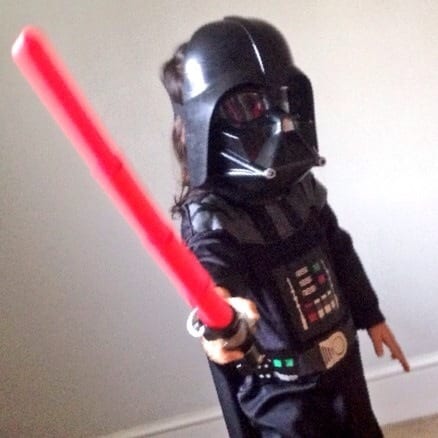
How Darth Vader defends my daughter’s right to be a girl

IMG_4088
‘Don’t take no sith from anyone’

It’s fancy dress week at my daughter’s preschool. So what should she go as? The question I should have asked my daughter was “What fancy dress would you like to wear?”. However, what we actually asked was “Would you like to wear your Darth Vader costume?” I just couldn’t let this opportunity to enlighten her peers slip by.

A local mum recently made a good point to me that I had never considered. Many of the children my daughter goes to preschool with will be at the same primary school, in the same year, maybe even the same class. They may continue to be her closest peers until adulthood. The same goes for lots of the children we see at playgroup, at the local park, soft play, the library, or even just the high street. What these children think, how they perceive the world, how they treat my daughter, will have a massively influential impact on the woman she becomes.

Part of my approach to parenting is to constantly refer back to my memories of growing up, and use that to positively inform my approach. The fantastical worlds of comic books and Star Wars loom large in my childhood (and adulthood too). They fired my imagination, but perhaps more importantly provided both escapism and inspiration to make sense of the world in the darkest times of my youth.

I want my daughter to have access to all of this too. Luckily, superheroes and Star Wars are still very much in vogue.

It’s also fair to say that I’m not a fan of Disney Princesses, and pinkification in general. So as well as simply sharing my enthusiasm for Star Wars with my daughter (she has all my old toys), this is also about me offering her an alternative to girly girl culture before she heads into the school system, and peer group pressure becomes a driving force in her development.

So far, my daughter really enjoys this stuff. So do all the little girls who come over for playdates – they always love to play with our Star Wars and superhero toys.

However, it seems very clear that to the likes of Hasbro and Disney (who own Marvel and Star Wars) these brands are just for boys. That’s another battle being fought by myself and others, but in the meantime, here in the trenches, our kids are forming opinions on what is and isn’t for boys or girls, based on the way these brands are marketed.

As she grows older, I worry my daughter might be singled out for displaying an interest in this geek stuff, simply because she’s a girl. I don’t want her to be perceived as ‘weird’ because she’s a geek. Perhaps even teased, ostracised, or bullied.

This mentality starts young. One time, a little boy saw me with my daughter, looked unsure, then asked me: “Is she a boy or a girl?”. When I confirmed ‘she’ was in fact a girl, he countered “Then why is she wearing a Spider-Man t-shirt?”. “Because she likes Spider-Man.” I replied. The boy’s older sister then chimed in, “Yeah, girls can like Spider-Man too y’know!”. The boy went away with a new concept to contemplate, while hopefully this exchange supported his sister’s seemingly healthy outlook on gender.

It also exists in adults who should know better. A friend who recently became a dad asked me ‘Why are you trying to make your daughter into a boy?’. Grasping for a calm answer, I replied ‘I’m not. There’s nothing inherently male about any of this stuff. I think whatever she wears are girl’s clothes, her toys are girl’s toys, her books are girl’s books. Because she’s a girl.’ After mulling it for a moment, he agreed with me. I think this had never occurred to him before, but now it makes sense.

My daughter & I get so many positive comments from parents when we’re out and about. I often then hear them telling their son or daughter how cool my daughter looks. So perhaps we are influencing some parents too.

I am confident I am doing right by my daughter, that these things are a positive influence on her developing personality. But in order for her to not be socially excluded because of it, I also need her peers and their parents to accept girls can be just as engaged with these things as boys.

So I feel that each time she runs around with a cape, carries her cuddly Spidey to the playground, wears her beloved Batgirl dress yet again, or goes out dressed as Darth Vader, she is doing her part to challenge (some) people’s idea of what it is to be a girl.

My hope is that by the time she gets to school, and her attire will switch from geek chic to school uniform, her fellow pupils will be so used to the idea that girls can like this stuff too, that it won’t be weird at all.

A Dispatch From The Gender Frontline (I Went to Some Toy Shops)

Needing to kill an hour or so, I took a stroll around the Westfield London shopping centre this week. I naturally gravitated towards the toy shops, and I decided to amuse myself by indulging in a spot of gendered toys mystery shopping.

The first shop I went into was The Entertainer. They are a large independent toy retailer, and I have a particular soft spot for them as they began with one shop in my home town neighbour of Amersham, Bucks. But sentimentality aside, I had no idea what they were like as a toy shop these days.

I was pleasantly surprised and really impressed with the way they categorise their toys – eg. ‘Action & Adventure’, ‘Arts & Creative’, ‘Cars, trains, and planes’ etc – not by gender. This seemed like such progressive (and logical) way to sort toys, that doesn’t exclude on the basis of gender – at least in how product is grouped. Bravo Entertainer!

The Entertainer toy shop

What I didn’t realise (until I tweeted about it) was that this came about because of a campaign by Let Toys Be Toys (we were living outside of UK when this happened). So bravo to them too. 🙂

I didn’t buy anything, but I will definitely be back to shop here, another branch, or online.

I was expecting the worst with the next shop I visited. I have written about the divisive way LEGO creates and markets its product before. The beloved Universal toy of my youth is no more. I have resigned myself to not buying any new LEGO, that in all likelihood my daughter will be playing with our ample hand-me-down supply throughout her childhood. So I went to the LEGO shop all prepared for their gendered marketing tricks.

But then I spotted this.

Lego Female Scientists set, Lego Female Scientists kit, Lego Female Scientists sold out, female scientist lego
Lego Female Scientists

Yes!

The female scientists minifigure set, that I had in my own little way campaigned so furiously for, that had finally been released only to be sold out everywhere… It was back! I stopped looking around the store, grabbed the set, and headed straight for the counter.

As I paid, I asked the staff about it. They told me they had only been delivered a small number of sets in the original release, and everyone in the company was surprised how popular it had been. The staff were keen to point out that they now have a much healthier stock of it. So if you’re thinking of buying some LEGO for your child (or you!), then I would strongly suggest that you get this one. I’m intending on saving it until Christmas day. Hopefully I can resist the urge to put it together it until then.

LEGO Research Institute 21110
My daughter’s LEGO Research Institute 21110

That’s all I can say about the LEGO shop. They could have had an entire wall of pink Friends sets, with a sparkling sign proclaiming ‘LEGO FOR GIRLS’, and I wouldn’t have noticed. That’s how chuffed I was to finally have this awesome set in my hands.

So it had been a really positive experience so far. My final stop was The Disney Store, which I entered with trepidation. I love Star Wars & Marvel (both acquired by Disney) as much as I do not love princess culture (pretty much created by Disney).

IMG_4015Given that Disney & gendered marketing to kids go together like the Empire & the Death Star, I tend to browse Disney’s virtual and actual aisles with frustration. This occasion was no exception.

Starting with Marvel, there was nothing in the store featuring a female character. No Black Widow in the Avengers line, no Gamora or Nebula in the Guardians of the Galaxy stuff, no additional female superheroes, nothing. *sigh

On to Star Wars.

There’s large section of the store devoted to movie merchandise, primarily the original trilogy. The lack of Leia merchandise was an early issue on this blog, so I was keen to see if things had improved at all. At first glance, it hadn’t. There was a prominent display featuring Han Solo, Darth Vader, Luke Skywalker, and a Stormtrooper – but no Princess Leia.

IMG_4040I scanned the large selection of Star Wars stuff here, and eventually found a Leia. In fact I found a couple. They were each part of different play-sets figures. One set was Jabba’s palace, which of course means one thing – Slave Leia.

An eagle eyed fan on Twitter also spotted a Torryn Farr figure. Who is she? The blink and you’ll miss her Rebel Comms officer from The Empire Strikes Back. She may not be the most active character in the trilogy (she sits in a chair and relays orders), but I guess at least she’s a female Star Wars character figure.

That’s not all the Star Wars gear the shop has now though. There’s a big display of merchandise from the brand new TV show Star Wars Rebels. It’s early days for the show, but it has TWO major female characters that are prominently featured in the artwork of the toy display. So I was curious about what the the product would be like.

Product? What product?

IMG_4009IMG_4037

That’s right. There was nothing, nothing, featuring either of the female characters of Sabine or Hera. Not an action figure, not a t-shirt, nothing. I asked a member of staff about this. She looked surprised, had a glance at the section, and then kind of shrugged “No, there’s nothing with any of the women”.

What’s a girl gotta do to get into the Star Wars line at the Disney Store? It seems even a pink skinny waisted Boba Fett with a boob plate can’t break the gendered marketing glass ceiling far, far away…

So in this flagship Disney Store, in one of the premier shopping centres in Britain, there were just three items including any female characters in the whole of their Marvel & Star Wars sections – nothing in Marvel, and Star Wars had a classic Princess Leia (as part of a set), Slave girl Leia (as part of a set), and an individual figure of a rebel who says “Stand by ion control…Fire!” and nothing else.

Apparently, Sabine & Hera will be included in the second wave of Star Wars Rebels figures being released by licensee Hasbro. Staff also told me “We’re going to get Princess Leia stuff soon. But they keep saying that”. They had no idea about female Marvel characters.

I didn’t buy anything, and I’m not planning on going back. I left the shop more frustrated than ever about the fact that The House Of Mouse now own Marvel & Star Wars. I really hope things change for the better, and they embrace the female – and girl – market for these brands.

I reflected that my previous positive toyshop experiences were both due to the willingness of brands/retailers to engage with feedback, listen to those seeking change, and take a good look at their offering.

In conclusion, in terms of gendered marketing and division of toys: The Entertainer good, The Disney Store sadly not, and the LEGO shop? Well, they had me at female scientist minifigure set and was the only shop I spent money in.

So while this may have been an unscientific survey, in the end it was all about science.

Playgroups: A Survival Guide for Dads

playgroups, dads, mums, stay at home dads, stay at home dad, moms, mothers, toddler, baby, survival guide,
My daughter at playgroup. Other than me, a stay at home dads free zone.

“Do you all spend the whole time cackling about shoes and celebrities?”

That was an actual question I asked my wife about our antenatal group. Like most men, I hadn’t really spent much time around large groups of women, and when I had they were usually drinking lots of Pinot Grigio or watching Mamma Mia. Or both.

Well, they DIDN’T chat endlessly about Women’s Mag stuff, and they accepted me as a stay-at-home dad without batting an eyelid, comfortable to talk of cracked nipples and weaning strategies alongside the kind of stuff we all used to converse about a lot more before becoming parents.

Playgroups are an extension of these gatherings. However, when you’re the only man walking into a roomful of women & kids who know each other but not you, it’s easy to feel a little overwhelmed. Don’t be.

You will be told how brave you are for going to a playgroup with lots of mums. Don’t believe this for a second. You’re not being brave at all. You’re just a dad taking his child to a playgroup. Treat it as the most normal thing any parent would do, because it is. If you approach it this way others will too.

So dads – whether you’re stay-at-home full-time or on temporary leave – don’t be shy and get out there. Here’s a few pointers to help you on your way.

Baby and toddler groups survival guide

1. Smile
No one wants to hang out with grumpy Graham in the corner. If you look like you don’t want to be there, you also look like you don’t want to talk to anyone – so they won’t bother. Smile, and people will smile back.

2. Children are a great conversation opener
“How old is your child?”, “How long have they been walking?”, “What a cool outfit”, etc. It’s very easy to start a conversation with women at a playgroup, by simply sharing facts & compliments about each other’s children. This also works in bars.

3. Be the engaged parent you are
To many, it’s still a novelty (even weird) to see a dad enjoying spending time with their child. In all likelihood, the mothers you want to know will recognise the same level of engagement that their partner has, or even wish they were more like you (no, really). Either way, they’ll like you all the more for it.

4. Offer to help out
Whether picking up a dropped toy, tidying up at the end of the session, or helping to run an actual group (as I do), helping out is a great way to endear yourself by showing again what an engaged parent you are.

5. Remember peoples names
I’m terrible at this, and it does really help to build a connection by demonstrating you’re interested in them enough to recall their name. Here’s a good playgroup hack: If you’ve forgotten, ask the child’s name, DO remember this, then look down the sign in book/sheet for that name and cross reference the parent’s name.

6. Bake something
Possibly sexist (sorry), but mums at one group still mention the batch of Anzac biscuits I brought to a group once. I didn’t even bake them – my wife did. It was the first time a lot of mothers actually talked to me, and they have done ever since.

7. You will think your singing voice sounds worse then everyone else’s. Probably because it is…
Most groups end with a sing-song. Your voice is (probably) lower than the mums & kids, so your singing will stand out. Don’t worry. This isn’t choir practice. If they do notice you, it’ll be for enthusiastically singing with your child, because it makes them happy. Which is cool.

8. Not all groups of mothers are a clique…
Don’t be intimidated. Just because there’s a group of women talking intently to each other in the corner, it doesn’t mean they’re an exclusionary clique. Stop basing your idea of female social structures on Mean Girls and Heathers.

9. …but mother cliques do exist.
Just like Mean Girls and Heathers, there are still exclusionary cliques around. If you encounter one, just walk on by. Don’t even assume it’s because you’re a dad – there are plenty of mothers who also feel excluded by these packs too. Be thankful – there are far more interesting people for you to get to know.

10. If you don’t like it, move along
It took me a few groups before I found ones I liked. Remember, it’s ok not to like them. Some groups were too religious, some classes too scripted, some full of mothers that just wouldn’t talk to me. Wherever you are, there are probably a bunch of groups to choose from, so shop around. Don’t be swayed by other people’s opinion – even your partner’s. Just because they found a group or class brilliant, doesn’t mean you have to. Find what works for you and your child.

When a Four-Year-Old Girl Thinks Science Toys Are Only For Boys, Something is Very Wrong

Some friends recently had an upsetting family trip to the Natural History Museum.

They have a bright, bold, and delightful daughter called Zoe – she amused me no end when inventively used our toys to enthusiastically stage a river raid on Noah’s Ark by Spider-Man & Hulk to rescue the animals from the clutches of supervillains Annihilus & Joker. Sitting cosily inside the marketing category of ‘Girl’ is seemingly not for her.

So at the museum shop, it was a shock to her parents when then four year old Zoe, after carefully inspecting the general science toys on display, sighed and lamented how they were only for boys.

Zoe’s mother was so upset about this that she wanted to cry. This is definitely not the way they wanted to bring their daughter up, and in fact they thought they were doing well by giving her trucks and other non-traditional girls toys. Their only conclusion was that this message must have come from outside the home.

It indicates the scale of the problem with gendered marketing. As parents, we do what we can to instil our children with positive & empowering messages and influences, to encourage them to discover what will engage & inspire them. But gendered marketing is so threaded into our everyday life – shops, TV, movies, magazines, and peers – that its effects will probably permeate through whatever defences we put up.

People like myself and others can rail against this. We may even convince the occasional retailer or manufacturer to change the way they define their products. One thing some companies are doing is introducing ‘girl’ versions of toys. You know the sort of thing, tool boxes, toy crossbows, and even science kits, that instead of being ‘normal’ colours, are pink. Some people (usually toy industry people) hail these as an ingenious development. But to me it simply reinforces the ‘pink is for girls’ mentality. They may play with the ‘perfume factory science kit’, but what happens when girls see an item that isn’t pink? They may assume it’s for boys and ignore it. What do boys take away from this? That only pink things are for girls, but this also excludes them from the likes of baby dolls and kitchen sets.

While we have this mentality, there will be countless stories where a girl decides a career isn’t for her because it’s not presented as such, or a boy may think being home with children is for mothers only. Children may privately carry on in this way of thinking their entire lives, perhaps even perpetuating it when they become adults. Who knows, maybe they’ll move into toy & children’s clothes marketing.

I actively encourage my daughter to play with toys that are not in the ‘pink aisle’, and to also wear clothes from the boy’s section too. But it’s easy for me to be an idealist. My daughter is not even three. As she gets older, and seeks out her own media, the marketeers will be able to reach her directly. The peer group pressure upon her to conform to the identity portrayed in these messages will also grow.

The retailers and manufacturers in question claim they are only feeding demand, but if as a consequence our children can grow up with the belief that science – and any tech or engineering role – is only for boys, something is very wrong. At least Zoe’s parents became aware of the the issue, and have managed to turn it around with her, by getting her a dress-up labcoat, science kits, and they even had a female chemical engineer telling Zoe how cool her job is! Many children will not be this lucky.

I hope the colour palette of childhood in retail evolves. That pink and pastels stop being the exclusive domain of our girls. That the whole spectrum is opened up for all. That brands I love such as Lego, Star Wars, and Marvel & DC stop positioning themselves as a girl free zone, and domestic & nursery toys are made to appeal to boys too. Luckily, there are entrepreneurial companies spotting the gap in the market for something beyond pink and blue.

The recent #WearYourSuperheroes Day was created by a girl in the US in support of her sister, who was teased for her love of superheroes. Whenever my daughter runs around the playground in her beloved superhero cape, I know (because they tell us) many boys and girls notice and have their already formed assumptions challenged.

Girl Wearing Cape, Female Superhero, supergirl, superhero fancy dressI dearly hope my daughter’s love of all kinds of colours, toys, and interests continues, that she doesn’t get directed exclusively down the pink aisle – and that we inspire others to join her too.

An earlier version of this post appeared here.